
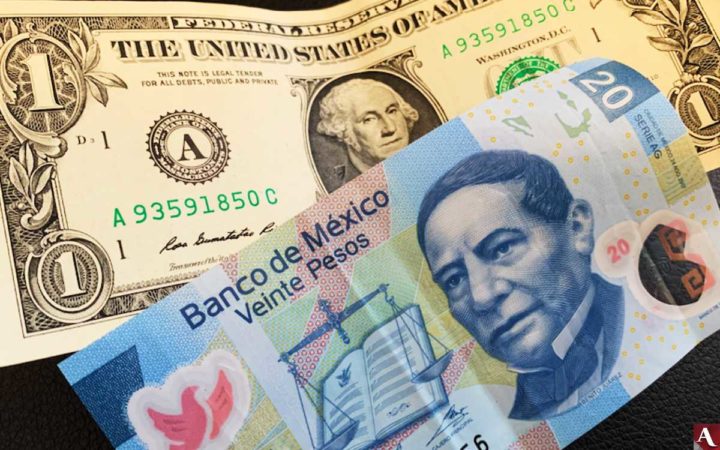
Mexico’s peso traded below 17 per US dollar on August 25 after gaining nearly 20% since January 2025. The move defied forecasts from the central bank and Wall Street that had expected the currency to weaken toward 21 per dollar.
A softer dollar has supported the rally, but Mexico’s relatively high interest rates have also attracted carry-trade capital. The central bank’s benchmark rate is around 7%, compared with roughly 3.75% for the US Federal Reserve, rewarding investors who borrow in lower-yielding currencies to buy peso assets.
Domestic conditions add to the currency’s appeal. Investors cite reduced trade-risk premiums, political stability and resilient macroeconomic management, while the peso has strengthened against currencies beyond the dollar, including the Swiss franc.
Mexico’s position in advanced manufacturing is another supportive narrative. Computer-server exports reached almost $83 billion in the first half of 2026, linking the country more closely to investment in artificial-intelligence infrastructure.
The appreciation lowers the local cost of imports and can help contain inflation, but it reduces the peso value of revenue earned abroad. That is increasingly uncomfortable for an economy that sends more than 80% of its exports to the United States.
Becle, Grupo Bimbo, Grupo Carso, Grupo Industrial Saltillo and Bolsa Mexicana de Valores all said the stronger currency weighed on their latest quarterly performance. Export volumes nevertheless remain strong, so the pressure is more visible in company margins than in aggregate shipment data.
The composition of the inflows raises questions about durability. Long-term investors such as pension funds and insurers largely stayed away after Mexico’s 2024 election, while hedge funds and other short-term traders drove more of the recent buying; speculative net-long positions are near their highest since early 2023.
Trade policy is the main reversal risk. The United States kept the USMCA in force but declined a new 16-year renewal, moving it into annual reviews, while a crowded carry trade could unwind quickly if rate gaps narrow or risk appetite deteriorates.