
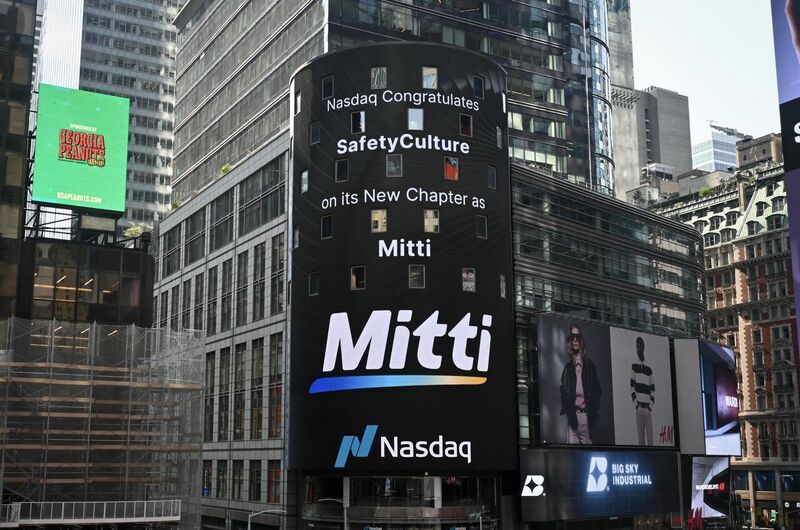
Australian workplace-software company SafetyCulture is rebranding as Mitti as founder Luke Anear expands its strategy from inspections and operational tools into commercial insurance. The privately held company was valued at about A$2.5 billion in its last major funding round. Anear says insurance, software and consumables could each eventually generate billions in annual revenue, an ambition rather than formal guidance.
Anear returned as chief executive in February 2026 after Kelly Vohs spent about 12 months in the role. Management wanted a consistent leadership presence at the company’s Surry Hills headquarters in Sydney. The return coincided with a period in which generative AI materially changed the speed and scope of product development.
The company says AI now writes roughly 90% of its code and that the share could reach 100%. Anear linked the acceleration to Anthropic’s Opus 4.6, which can process large codebases and complex files. Mitti says it is avoiding broad software layoffs by moving engineers toward product judgment, customer contact and higher-level system design.
Mitti is also developing proprietary AI models and buying its own chips and servers. Its planned computer-vision tools can identify trip hazards or improper lifting in real time, alert a worker and recommend training. Other operational systems can track restaurant ingredients at gram-level precision as sales pass through a point-of-sale system.
The new corporate name comes from the insurance brand SafetyCulture originally created with QBE. SafetyCulture bought QBE’s remaining 50% interest in the joint venture in 2023, taking full control. The business is licensed across 51 U.S. states and jurisdictions but currently writes policies in 10 Midwestern states, an important distinction between regulatory reach and active underwriting.
Anear argues that 15 years of inspection data and four billion workplace images can improve commercial-risk selection and prevention. The opportunity is large: he cited a $7.5 trillion global insurance market, including $2.5 trillion of property and casualty coverage. Market size does not itself establish Mitti’s achievable share or underwriting profitability.
Analysis of Mitti’s own portfolio indicates customers using the workplace platform have 19% lower claims costs and a 9% better loss ratio than those who do not. Hospitality operator Trippas White Group has cut claims by as much as 35% in some areas. These are company and customer results, not an independently validated industry-wide guarantee.
The strategic bet is that prevention software can improve underwriting rather than merely use data to offer cheaper policies. Execution requires regulatory approvals, disciplined pricing, enough loss history, secure handling of sensitive workplace data and effective integration of software, training, consumables and coverage. The rebrand establishes the direction; it does not yet prove the multibillion-dollar outcome.