

Brent crude was on course for a roughly 16% weekly decline on November 6, its steepest percentage fall since the start of the pandemic and its largest dollar drop in market records extending to 1988. West Texas Intermediate was set to lose about 13%. Yet Friday trading was firmer: January Brent rose 0.3% to $98.60 a barrel at 11:29 GMT and WTI gained 0.5% to $91.
The weekly collapse followed a rapid repricing of geopolitical risk after US midterm elections shifted both houses of Congress to Democrats. Traders inferred that the result could encourage de-escalation in the US-Israeli war with Iran and allow more Middle Eastern exports. Oil fell 8% on Wednesday alone and settled at two-month lows. Political inference, however, is not a ceasefire or signed agreement.
Supply and demand signals reinforced the decline. Physical premiums for Middle Eastern benchmark crude returned toward pre-conflict levels, while analysts described the global balance as loosening toward oversupply after high prices damaged demand. A broader selloff in technology and risk assets also reduced appetite for commodities, linking the oil move to financial positioning as well as barrels.
The apparent surplus is not uniform across grades and locations. Refiners can only process certain qualities, and disrupted routes force longer voyages and ship-to-ship transfers near the Strait of Hormuz. More barrels on paper do not immediately solve a shortage of the right crude at the right refinery, nor do they eliminate freight, insurance and scheduling costs.
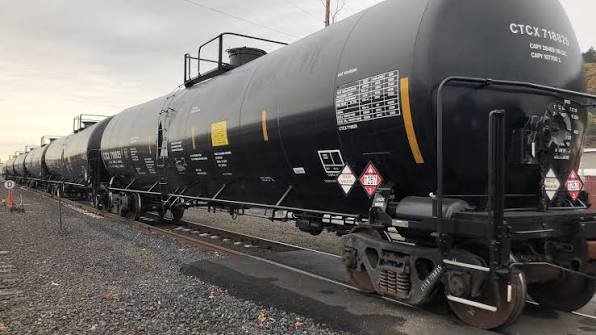
Tanker attacks provided the floor under prices. Maritime-security data indicated that attacks on oil-carrying vessels in the Gulf and Strait of Hormuz were running close to record levels. Iran reported three additional tankers attacked. Each incident can increase insurance, delay loading or divert ships even when no large volume is permanently removed from production.
That distinction explains the violent two-way trading. De-escalation expectations lower the war premium, but unsafe transit preserves a logistics premium. Brent can fall from extreme levels and still remain expensive for consumers and refiners. A price near $98 does not mean transport routes, product availability or the regional security problem have normalised.
Contract mechanics also matter when comparing weekly performance. The front Brent contract rolled after the December contract expired on October 30, so percentage calculations can vary with the selected contract and observation time. The broader conclusion remains intact: both benchmarks suffered an exceptional weekly reversal, while Friday’s recovery recaptured only a small portion.
A durable move lower needs a credible Iran agreement, safer Hormuz transit, normal freight and insurance, restored export flows and evidence that supply exceeds demand across usable grades. Renewed attacks or diplomatic backlash could tighten fundamentals quickly. The weekly figure is therefore a record-like market event, not proof that the underlying conflict premium has vanished.