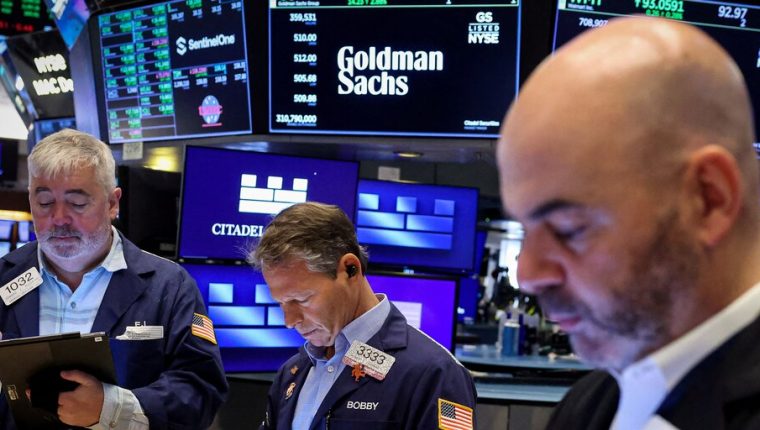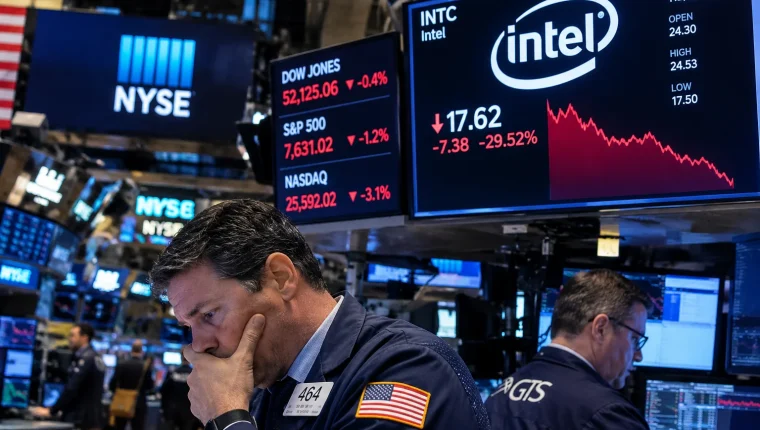

United States stocks rose on Monday morning, recovering part of the technology-led selloff that had produced a third consecutive losing week. At 10:15 a.m. Eastern time, the S&P 500 was up 0.8% and stood about 2.3% below its record. The Dow Jones Industrial Average had gained 547 points, or 1.1%, while the Nasdaq Composite was 1% higher. These were intraday readings, not closing prices.
The immediate relief came from energy. Brent crude fell 6.7% to $105.87 a barrel after Iran said it had a two-day plan to reopen the Strait of Hormuz and resume nuclear talks with the United States. Lower oil reduces near-term pressure on transport costs, corporate margins and inflation expectations, but diplomacy remained incomplete and the physical flow of energy had not yet normalized.
Oil’s volatility explains why investors treated the improvement cautiously. The most actively traded Brent contract has moved between roughly $70 and $120 since before the war, reversing quickly on military and diplomatic headlines. A single decline can support risk assets without establishing a lasting energy trend, especially while shipping security and the timing of a reopening remain uncertain.
Artificial-intelligence shares also stabilized after severe losses. Alphabet rose 2.4%, recovering a fraction of the more than 12% drop it suffered on Thursday, its worst session as a public company. Nvidia gained 1.9% after falling 4.2% on Friday and surrendering the title of Wall Street’s most valuable company to Apple. A rebound did not answer whether AI infrastructure will produce adequate free cash flow.
The underlying concern is capital intensity. Large technology companies are committing hundreds of billions of dollars to chips, data centers and power while their core businesses face competition and financing costs. Investors are distinguishing AI demand from AI profitability: utilization can rise while depreciation, energy, interest and development expenses delay returns to shareholders.
Strength extended beyond technology. Marriott International gained 4.3% after reporting stronger results and saying Middle Eastern trends had improved from the spring despite the war. A manufacturing survey also showed better activity than economists expected and slower growth in its price measure, a combination that supported hopes for expansion without another acceleration in inflation.
International markets offered a mixed but steadier backdrop. South Korea’s Kospi rose 2.2% as large technology companies recovered. Shanghai gained 1.1% and Hong Kong 0.4%, helped by expectations that about 100 billion yuan would be deployed through a new Chinese market-support program. European indexes moved only modestly, showing that the rebound was not a uniform global surge.
The next evidence will come from the final close, technology earnings, jobs data, the U.S. midterm elections and concrete progress on Hormuz and nuclear talks. Monday’s early move showed that lower oil can quickly restore risk appetite. It did not reverse three losing weeks, validate AI valuations or establish that geopolitical inflation risk has disappeared.