

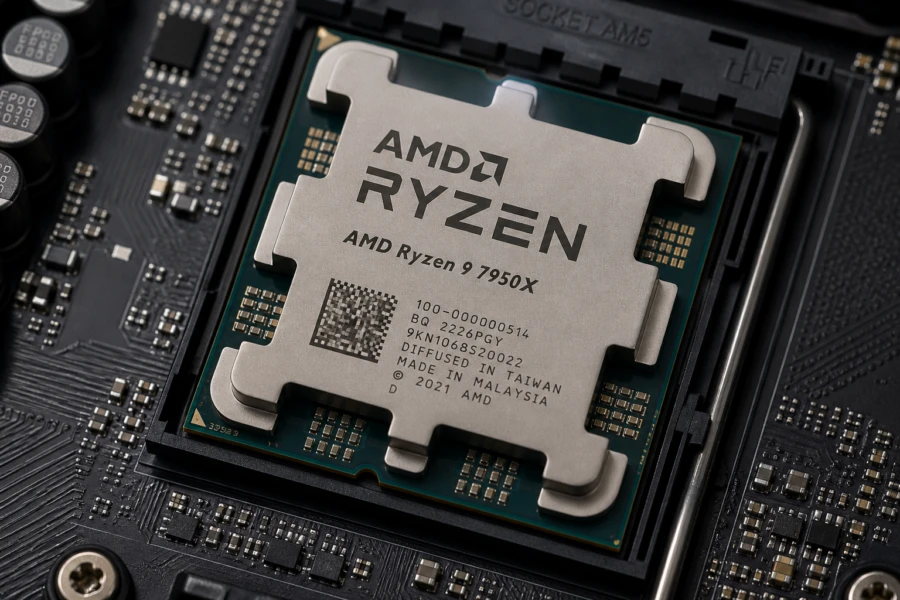
Advanced Micro Devices shares rose 4.9% to close at $479.18 on August 25 after Raymond James upgraded the stock to Strong Buy from Outperform. The investment bank raised its price target to $641 from $565.
Analyst Simon Leopold argued that central processing units are underappreciated in artificial-intelligence infrastructure. Accelerators perform the heaviest model calculations, but CPUs coordinate those chips and manage data retrieval, databases, sandboxes and software tools.
That support role becomes more important with agentic AI, where autonomous systems can run persistent, multi-step workflows. Demand therefore depends not only on model size or token generation but also on the number of active agents, workflow duration and concurrent tasks.
Raymond James forecasts the server CPU market will grow at a 44% compound annual rate to about $201 billion in 2030. Its breakdown includes $33.5 billion of conventional data-center CPUs, $83 billion of processors that host AI accelerators and $85 billion tied to agentic workloads.
The bank views AMD as having the strongest combination of direct earnings leverage, data-center positioning and market-share gains. Its EPYC processors already compete with Intel in general-purpose servers, giving the company an installed route into new AI-related workloads.
The $201 billion base case is broadly consistent with Nvidia’s long-term framework and below AMD’s own estimate of a $220 billion opportunity. Raymond James said faster adoption of AI agents could lift its model toward the company’s figure, so the larger outcome remains conditional.
The bullish thesis does not assume workload growth translates one-for-one into chip shipments. Better utilization, more efficient software, custom silicon and offloading tasks to accelerators could absorb part of the demand and reduce the number of CPUs required.
Arm Holdings may benefit through server royalties and custom silicon, while Intel remains exposed to market-share losses even if the overall market expands. The upgrade is an analyst opinion rather than a company forecast, and AMD’s share-price response reflects expectations that still depend on execution and adoption.