
SpaceX and Tesla lost more than $1.2 trillion of combined market capitalization in July, placing the two largest publicly traded businesses controlled by Elon Musk among the technology sector’s steepest decliners. The selloff marks a sharp reversal from the premium investors had assigned to their space, electric-vehicle, artificial-intelligence and robotics ambitions.
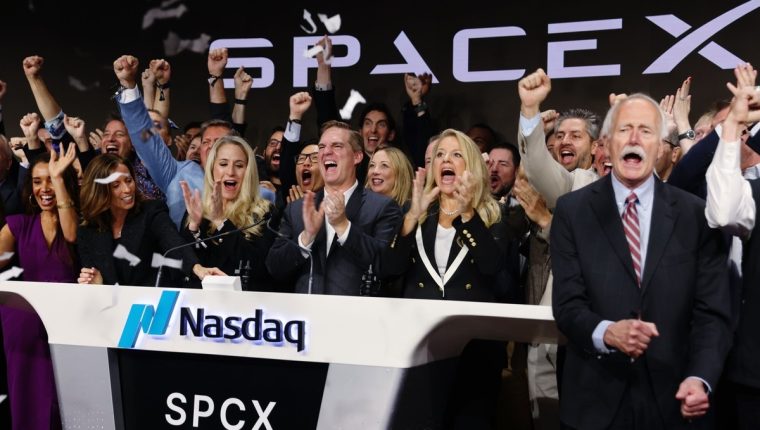
SpaceX accounted for more than $750 billion of the monthly decline. The space-services company had completed the largest initial public offering on record on June 12, raising more than $75 billion, and followed it days later with a $25 billion bond placement. That rapid access to equity and debt capital magnified the contrast with the subsequent fall in its shares.
SpaceX stock lost 30% over the latest 30-day period and touched $107.01 on Tuesday. It stood 52% below the $225.64 record reached on June 15, erasing about $1.47 trillion of value from that peak. Its first quarterly report as a listed company, scheduled for August 4, will test whether revenue and cash generation can support the valuation while deployment costs for AI infrastructure remain under scrutiny.
Tesla removed more than $440 billion from its own market value during July and has lost roughly one-third of its capitalization since the start of the year. Second-quarter revenue and vehicle deliveries reached records, but operating profit fell 57% from a year earlier and the operating margin narrowed to 1.4%, showing that volume growth did not translate into comparable earnings power.
The gap was also visible below the operating line. Tesla’s adjusted earnings of $0.33 a share missed the $0.53 analyst consensus, while free cash flow turned negative as spending on AI, robotics and autonomous initiatives increased. Robotaxis, Full Self-Driving and the Optimus humanoid program remain strategic options, but they are not yet close to supplying the profits needed to offset their current capital demands.
The repricing extended across large technology companies. Alphabet lost about $375 billion of market value during the month, Micron Technology $287 billion, Nvidia $87 billion and Amazon $74 billion. Their declines show that investors are applying a higher burden of proof to companies whose AI plans require heavy near-term investment, even when their core businesses remain substantial.
Apple moved in the opposite direction, adding almost $700 billion of market capitalization and displacing Nvidia as the world’s most valuable listed company. Its shares reached a record above $339 and gained more than 23% since January. The rotation favored Apple partly because it has less direct exposure to the infrastructure buildout that is weighing on the cash requirements of several technology rivals.
SpaceX’s August 4 results are the next immediate valuation catalyst, with investors looking for detail on infrastructure costs after the IPO and bond financing. Tesla faces a parallel test: it must show how record deliveries can restore margin and cash flow while funding autonomy and robotics. Until those businesses produce clearer returns, the combined $1.2 trillion July decline leaves Musk’s valuation premium tied more closely to execution than to the scale of his long-term projects.