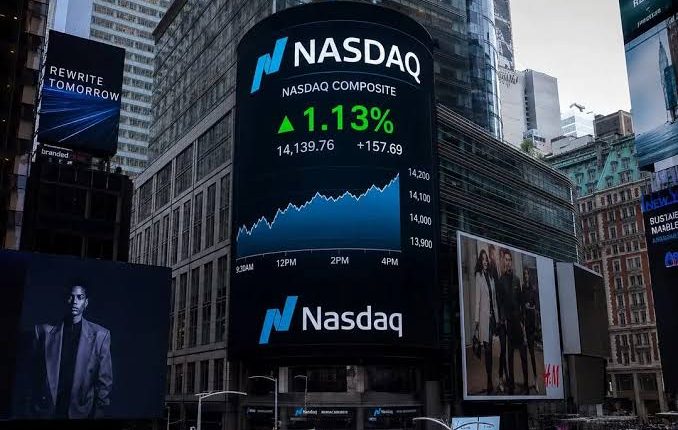

Major U.S. equity indexes rose after September payroll growth came in well below expectations, reducing the perceived chance of an immediate Federal Reserve rate increase. The Nasdaq Composite gained 1.2% to 27,190.86, the S&P 500 rose 0.7% to 7,722.72 and the Dow added 0.5% to 51,176.96.
Nonfarm payrolls increased by 29,000, compared with a forecast of 90,000. August growth was revised to 133,000 from the previously reported 162,000. The report showed a cooler hiring pace, although market participants did not describe the labor market as collapsing.
Rate pricing adjusted quickly. Traders assigned roughly an 80% probability that the Fed would leave rates unchanged in October, up from 74% before the data. They still priced about an 86% chance of a December increase. Both figures are market estimates, not policy commitments.
The bond market delivered a different message. Treasury yields initially fell after the jobs release but later rose, extending a selloff that has lifted global borrowing costs. The ten-year yield added 4.72 basis points to 5.281%, while the two-year yield rose 3.98 basis points to 4.827%.
The ten-year yield was heading for a fifth consecutive weekly increase, and had closed September with its largest quarterly rise since 1994. Energy-driven inflation concerns and pressure on public finances continued to compete with evidence of slower employment growth.
European sovereign debt remained volatile. The spread between French and German ten-year yields widened to its largest since the euro-area debt crisis in 2011, highlighting how political and fiscal risks can fragment rate moves even when monetary expectations are shared.
The equity gain was geographically broad: a global index rose 0.6% and the STOXX 600 added 0.75%. The dollar weakened against the euro and yen, while Brent advanced 0.45% to $102.77 a barrel, WTI fell 1% to $91.90 and spot gold lost about 1%.
The session therefore did not offer a simple risk-on signal. Softer jobs data supported rate-sensitive shares, but renewed bond selling kept the cost of capital elevated. The divergence shows that slower hiring can ease expectations for the next meeting without resolving longer-term inflation and debt concerns.