
U.S. stocks ended July with gains but not with a clean return to risk appetite. The S&P 500 rose 0.7% to 7,489.72, the Dow added 276.97 points to 52,485.03 and the Nasdaq climbed 1% to 25,373.85, after all three moved sharply within the session.
Amazon supplied the strongest support, jumping 15.3% after quarterly profit more than tripled from a year earlier and cloud growth accelerated. Investors treated the results as evidence that heavy artificial-intelligence investment may be producing returns, even as Amazon raised its spending forecast.
The technology signal was selective rather than universal. Microsoft had posted its best session in almost 18 years a day earlier, but Micron moved from a 6.4% early gain to a 5.9% closing loss. Apple fell 7.4% despite stronger profit because its revenue-growth outlook missed expectations amid an AI-related component shortage.
Energy preserved the inflation challenge. Brent crude gained 1.2% to $87.93 after trading between $72 and $102 during July as the Iran war disrupted expectations for Middle East flows. U.S. regular gasoline averaged nearly $4.11 a gallon, up from $3.85 a month earlier, spreading pressure through transport and goods prices.
The bond market reflected that pressure. The ten-year Treasury yield rose to 4.71% from 4.68% and stood far above the 3.97% recorded before the war drove oil higher. The Federal Reserve kept its main rate unchanged while Chair Kevin Warsh reiterated a 2% inflation objective without specifying the policy path, intensifying debate over credibility.
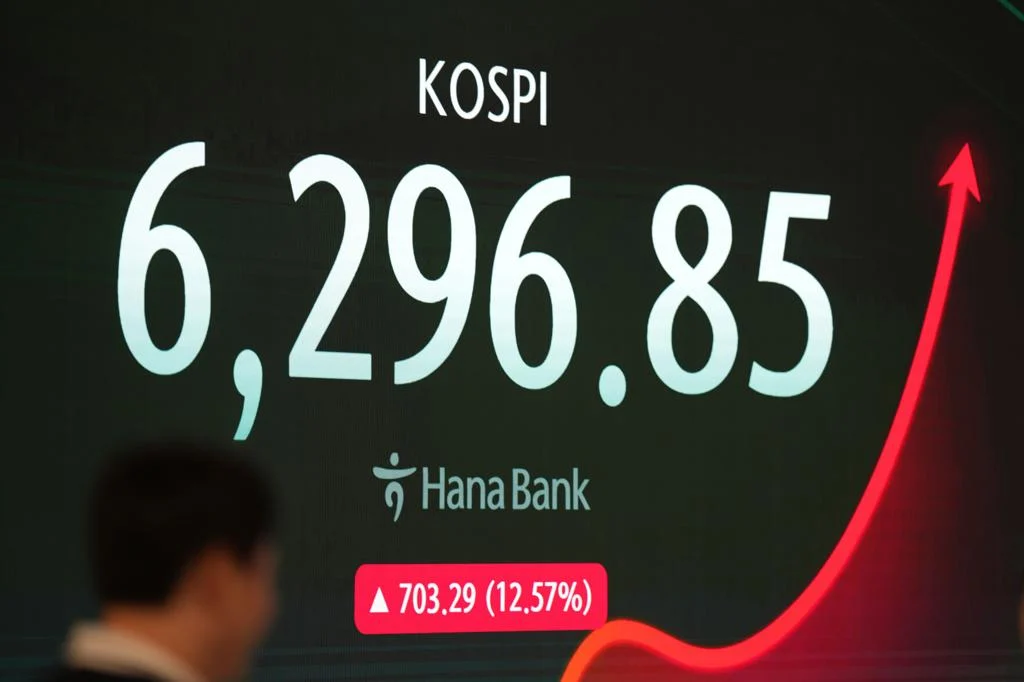
South Korea showed the most extreme version of the AI trade. The Kospi surged 17.9% for its best day on record, with Samsung Electronics and SK Hynix each gaining at least 26.8%. Yet the index still lost 22% for July after more than doubling during the first half, revealing how leverage and concentrated chip exposure amplified both directions.
Friday gave the S&P 500 its first winning week in three, but the index still finished July with a small monthly loss. The contrast between strong hyperscaler earnings and weak reactions at some suppliers shows that markets are no longer rewarding every AI-linked asset equally; guidance, cash returns and positioning now determine the response.
The next market phase hinges on whether corporate AI profits can offset higher energy costs and bond yields. Amazon offered a positive proof point, but Apple, Micron and Korea demonstrated the fragility of crowded positions. July closed with higher indexes on the day, not with the underlying conflict between growth enthusiasm and inflation risk resolved.