
Robinhood earned an adjusted 48 cents per share in the second quarter, ahead of the 44-cent market estimate. The result showed that retail trading remained active through a period of volatility shaped by the U.S.-Iran conflict, changing inflation expectations and uncertainty over the Federal Reserve’s interest-rate path.
Transaction-based revenue rose 44% from a year earlier to $776 million. Equities and options contributed to the increase, while event contracts generated $156 million and established prediction markets as a material business rather than a peripheral engagement product.
The mix is changing quickly. Interest in event contracts accelerated during the 2024 U.S. presidential election, but the current quarter indicates that the format can retain users beyond a single political cycle. Management said the platform recorded transaction highs across equities, options and prediction markets.
The expansion also gives Robinhood a new customer-acquisition channel. Event contracts can attract users who do not begin with conventional stock or crypto trading, after which the company can offer deposits, subscriptions and other financial products. That cross-selling potential is central to the strategic value of the category.
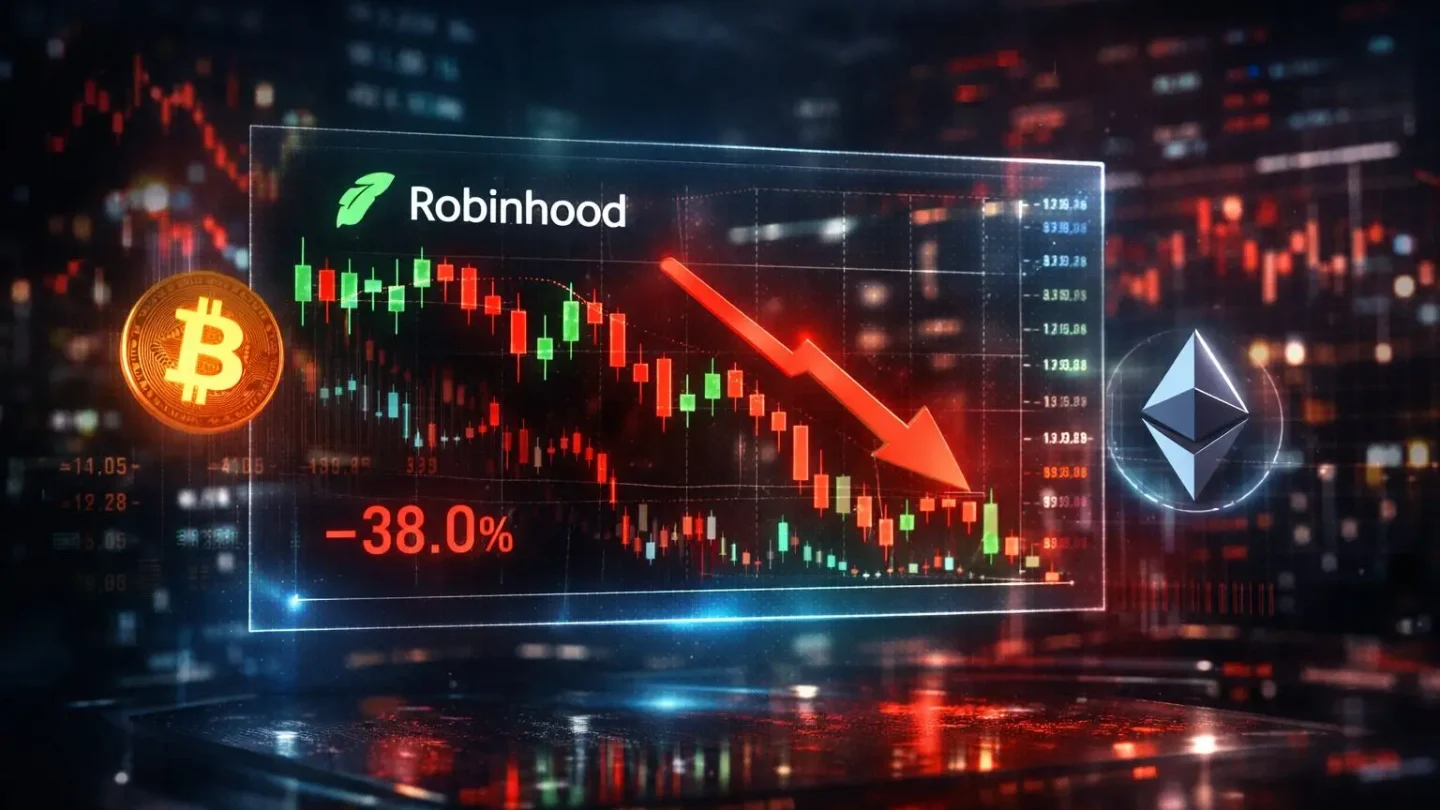
Cryptocurrency moved in the opposite direction. Crypto transaction revenue fell 38% year on year to $100 million as weaker digital-asset prices, continued volatility and investor interest in artificial-intelligence assets reduced activity. The decline makes revenue diversification more important even though crypto remains part of Robinhood’s identity.
The quarter was broader than the prediction-market gain alone. Better-than-expected transaction revenue, net interest income, deposits, subscription growth and expense control indicate that several operating levers improved together, reducing dependence on one volatile asset class.
Investors nevertheless kept a demanding standard. Robinhood shares slipped 0.8% in extended trading and were down 20.6% for the year through the previous close. After an earlier surge in the stock, the combination of high expectations and a shifting revenue mix leaves little tolerance for a slowdown.
The next test is whether event-contract activity can remain durable outside major elections and convert into recurring use of Robinhood’s wider platform. Management must also show that gains in equities, options and subscriptions can continue to offset crypto weakness without requiring materially higher spending.