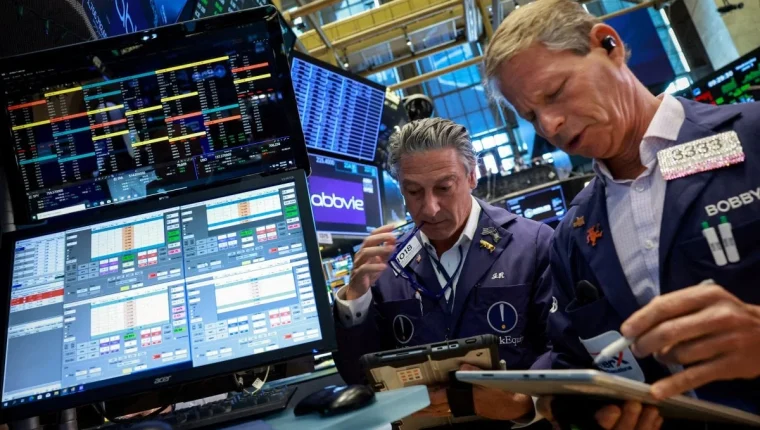

U.S. equity futures moved higher as investors returned to corporate earnings after the Federal Reserve held its benchmark rate steady. S&P 500 futures gained 0.5%, Dow futures rose 0.4% and Nasdaq futures advanced 1.3%, pointing to a technology-led rebound.
Microsoft rose more than 9% after its profit exceeded expectations on the strength of Azure cloud services. Meta moved the other way, falling 8.3% after missing profit targets and reporting $42 billion of costs and expenses, 55% more than a year earlier.
The split sharpened the market’s central AI question: cloud demand is producing visible revenue for some suppliers, while enormous spending on infrastructure and models remains difficult to translate into near-term profit for others. Investors rewarded operating evidence and penalized open-ended capital intensity.
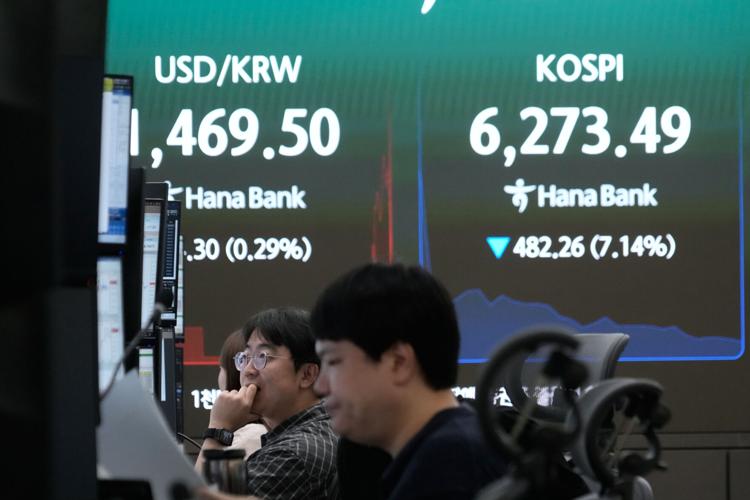
South Korea showed the harsher side of that repricing. The Kospi fell 1.2% after losses of 10.8% on Tuesday and nearly 6% on Wednesday. At 5,593.56, the index was more than 38% below its June record, despite remaining almost 30% higher for the year.
Semiconductor earnings did not stop the decline. Samsung Electronics slipped 0.7% despite record operating profit, while SK Hynix dropped 5.6% after a record result that was still below expectations. The reaction showed how elevated forecasts can overpower absolute growth.
Monetary policy added another valuation constraint. Three Federal Reserve policymakers preferred a rate increase, and the ten-year Treasury yield rose to 4.68% from 4.61% late Tuesday. Higher yields raise the discount rate applied to long-duration technology earnings.
Oil prices eased even after fresh U.S. strikes against Iran. Brent fell $1.06 to $87.03 a barrel and U.S. crude lost $1.10 to $83.36, although Brent remained far above its roughly $72 level before the Iran war began in late February.
The next market test is whether earnings can stabilize AI valuations while bond yields remain high. Microsoft’s cloud acceleration and Meta’s cost burden set opposing benchmarks; Asian chipmakers must now show that record profit can still exceed the expectations already embedded in their share prices.