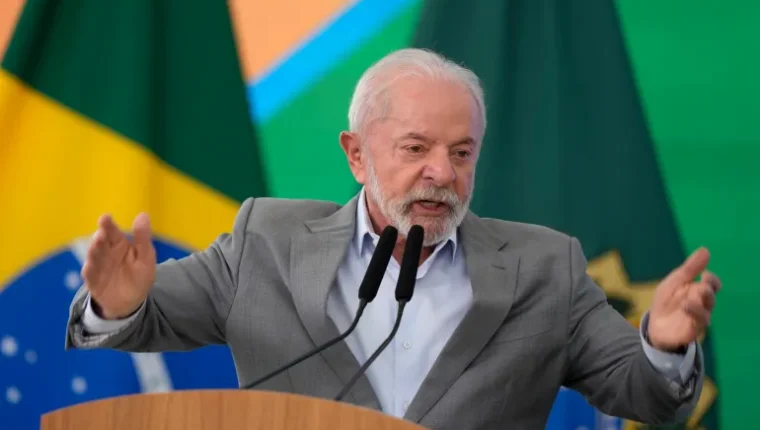


Brazil and South Korea agreed to establish a working group to accelerate negotiations on a trade agreement between Seoul and Mercosur. Presidents Luiz Inácio Lula da Silva and Lee Jae Myung presented the decision in Brasília, with Lee describing an agreement with the South American bloc as urgent rather than announcing that market-access terms had already been settled.
Mercosur brings Brazil together with Argentina, Paraguay and Uruguay, so Brasília cannot conclude the bloc-wide agreement alone. Negotiations with South Korea began in 2018 but later stalled over the protection of agricultural and manufactured goods. The working group must therefore resolve sectoral sensitivities that previous political commitments did not overcome.
The renewed effort has a sharper strategic context. Brazil is seeking additional markets while new U.S. tariffs raise costs in one of its most important commercial relationships. A Korean agreement would not immediately replace U.S. demand, but it could diversify export destinations, import sources, investment channels and industrial partnerships across Asia and South America.
Mercosur has recently completed negotiations with the European Union and the four-member European Free Trade Association comprising Switzerland, Iceland, Liechtenstein and Norway. Those precedents show the bloc's capacity to negotiate wide agreements, but they also underline that political announcements must still become detailed schedules, rules of origin, safeguards and domestic ratifications.
Brazil and South Korea identified two practical tracks alongside the broader negotiation. A South Korean mission will visit Brazil in August for a sanitary evaluation of Brazilian meat-processing plants, a technical step that can determine actual food-market access. The leaders also agreed to deepen cooperation in critical minerals, where supply security and industrial processing matter as much as tariff reductions.
The meeting builds on a summit held five months earlier in Seoul. That encounter produced ten memorandums and a four-year action plan spanning trade and industrial policy, artificial intelligence, agriculture, health, biotechnology, small businesses, defence, space and food security. The new group will be judged by whether it converts that broad agenda into negotiable commercial provisions.
South Korea is Brazil's largest trading partner in South America, while Brazil is promoting its large rare-earth and nickel reserves to Korean industrial investors. That complementarity creates potential links between mineral extraction, local processing, advanced manufacturing and technology supply chains, but the distribution of investment and value added will be central to domestic support.
The next milestones are the composition and mandate of the working group, the August sanitary inspection, agreement among all four Mercosur governments and the release of concrete market-access proposals. Until tariff schedules, product exclusions and implementation rules are defined, the initiative remains a reopening of negotiations rather than a completed trade deal.