
De Havilland Canada reached an agreement with the Canadian government and Export Development Canada for up to C$2.5 billion in financing to expand production of the DHC-515 amphibious firefighting aircraft. The commitment is a financing ceiling to be delivered through the export-credit agency, not a confirmed non-repayable grant or an announcement that the entire amount has already been advanced.
The manufacturer intends to use the capital to hire workers and add capacity at sites in Victoria, Calgary, Toronto, Kitchener and Fort Erie. It also expects suppliers from Newfoundland to British Columbia to receive additional work. The plan therefore links an aircraft program to a national industrial chain, but the distribution of funds among buildings, equipment, working capital and supplier support was not disclosed.
The production objective is to make additional delivery positions available beginning in 2030 and then ramp toward twice the company’s current aircraft capacity. That timeline matters: financing can accelerate tooling, recruitment and component orders, but aircraft output cannot double immediately. De Havilland expects the financing transaction itself to be completed by the first quarter of 2027, before the expanded slots reach the market.
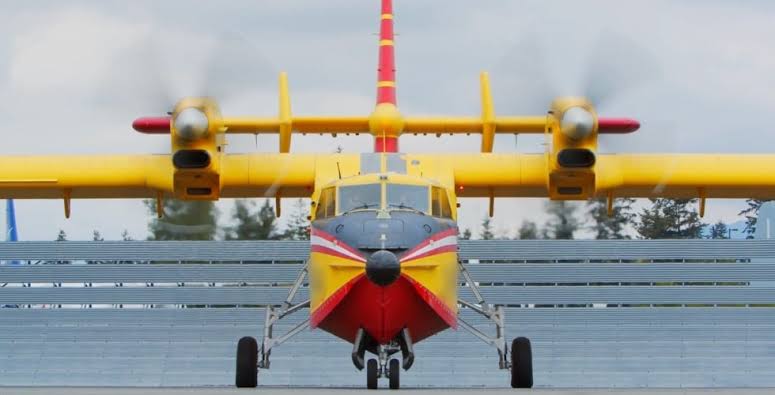
The DHC-515 is a purpose-built amphibious waterbomber with a tank capacity of about 6,137 litres. It builds on the Canadair firefighting lineage with modern avionics and production standards. Demand is supported by more severe wildfire seasons and replacement needs. De Havilland has been producing aircraft for European customers and has contracts with Canadian provinces, creating a backlog that extends well beyond a normal commercial cycle.
Existing orders provide the commercial basis for expansion, but public financing still carries execution and credit questions. The announcements do not specify the mix of direct loans, guarantees or other instruments, nor interest rates, maturities, security, drawdown conditions or government risk exposure. “Up to” means access may depend on milestones and eligible expenditure rather than a single payment at closing.
Scaling a specialized aircraft line requires more than factory floor space. Suppliers must accelerate engines, structures, avionics and mission systems while preserving certification and quality. Skilled labor has to be trained before volume rises. A delay at one constrained component can move delivery schedules even if final assembly has funding, which is why the agreement explicitly includes cooperation with the DHC-515 supply base.
The policy rationale combines wildfire resilience, exports and employment. More aircraft could expand response capacity in Canada, the European Union and other markets while creating thousands of Canadian jobs. Yet job and output claims remain prospective until facilities are built, people are hired and firm orders occupy the new slots. Public support also concentrates risk in a program whose economics depend on government and emergency-service procurement.
The next evidence will be final financing documents, conditions, actual drawdowns, capital projects, supplier contracts, hiring, certification progress and delivery performance. The agreement gives De Havilland a credible route to finance capacity ahead of demand, but it does not itself deliver an aircraft. Success will be measured by whether 2030 slots become completed DHC-515s on time, at sustainable cost and without transferring unpriced risk to the public balance sheet.