
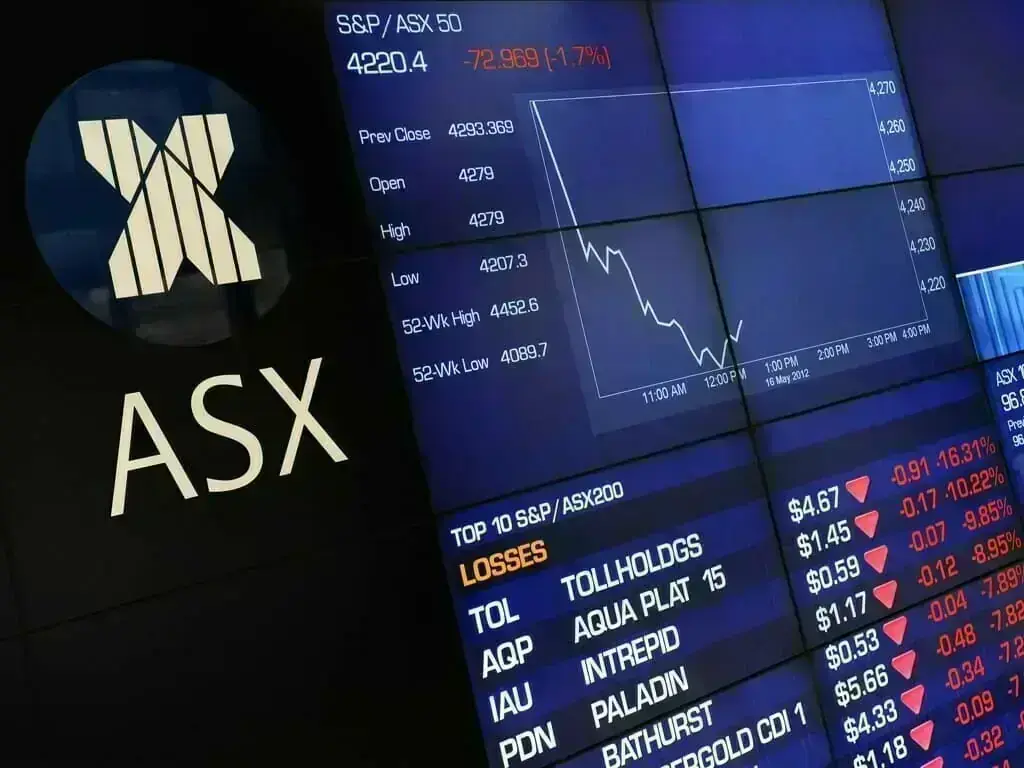
Australian equities opened August above the 9,000-point threshold as easing concern over Iran encouraged a measured return to risk. The S&P/ASX 200 gained 0.5% to 9,019.30, extending the momentum from July, when the benchmark recorded its strongest monthly advance in five months.
The geopolitical catalyst was a signal that Iran and other Middle Eastern countries had requested time to complete an arrangement for the immediate and full reopening of the Strait of Hormuz. Investors treated that possibility as constructive for trade and energy flows, but the market response remained conditional on evidence that a ceasefire can hold.
Financial shares rose 0.4%, with three of Australia’s four largest banks gaining between 0.2% and 0.8%. The move reflected improved sentiment rather than a sudden change in bank fundamentals. Major lenders still face a difficult operating mix in which geopolitical pressure on oil could delay rate relief and keep funding and credit conditions under scrutiny.
Interest-rate expectations were notably restrained. Markets assigned almost no probability to the Reserve Bank of Australia lifting its 4.35% cash rate at its next meeting and showed little expectation of a September move. That pricing leaves bank valuations sensitive to any inflation or energy shock that changes the expected policy path.
Healthcare and consumer staples each advanced about 1%, showing that investors combined selective risk-taking with exposure to defensive earnings. 4DMedical led healthcare gains, while Treasury Wine Estates topped consumer staples. Gold miners added 0.7% as bullion prices strengthened, reinforcing the session’s mixed defensive and cyclical character.
Energy provided the clearest counterweight. The sector fell 1.2%, its weakest session in a week, as oil prices declined on hopes that traffic through the strait could normalise. Woodside Energy lost 1.4% and Santos fell 1.9%, illustrating how the same geopolitical development that supported the wider index reduced the risk premium embedded in producers.
The regional signal extended beyond Australia. New Zealand’s S&P/NZX 50 rose 0.6% to 13,774.93 points. Even so, the Australian advance was not broad enough to establish a durable risk-on regime: sector dispersion remained high, and the ceasefire, shipping route and rate outlook all retained material uncertainty.
Attention now shifts from geopolitics to the August reporting season. Corporate results will test whether the July rally and the index’s move above 9,000 are supported by earnings, margins and guidance. Until those data arrive, the session is best read as a selective repricing of immediate risk rather than confirmation of a new market trend.