
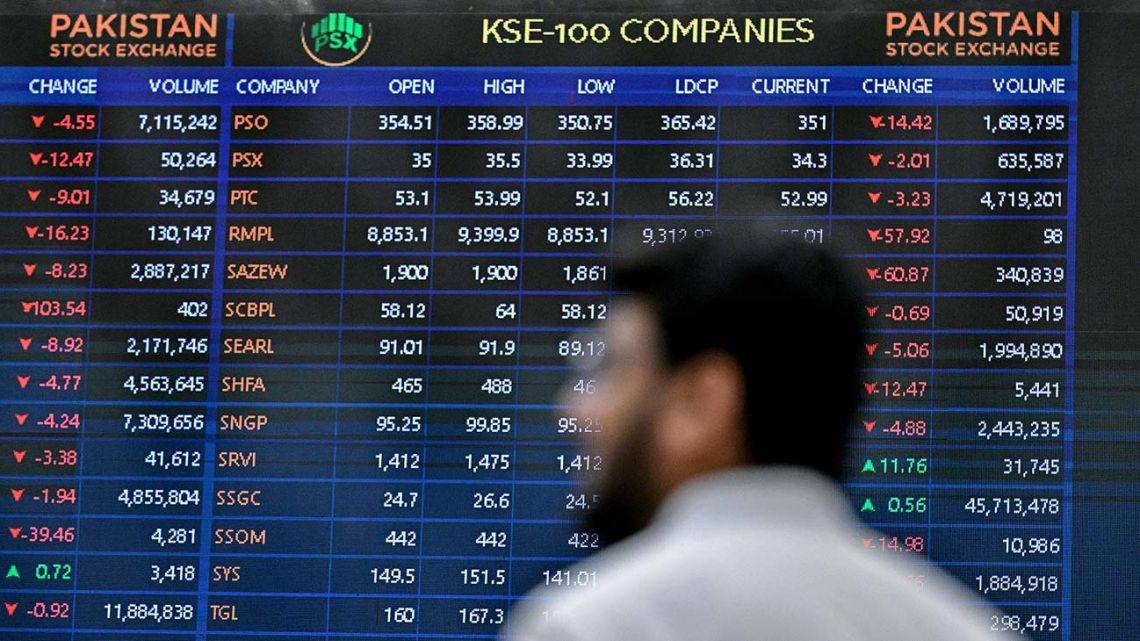
Global equities fell on Monday as higher oil prices and government-bond yields reduced investors’ appetite for risk before central-bank meetings in the United States and Japan. The move crossed regions and asset classes, showing how the energy shock was feeding directly into interest-rate expectations.
Technology and industrial shares led declines on Wall Street, while the Philadelphia semiconductor index lost about 5%. AI-linked companies faced additional pressure after leading executives publicly urged a slowdown in advanced artificial-intelligence development to manage safety risks.
European equities also weakened, although oil and gas companies gained as crude rose. That divergence is important: expensive energy can support producers while increasing costs and inflation exposure for transport, manufacturing and consumer-facing companies.
Brent settled 1% higher at $105.68 a barrel after rising almost 5% during the session. The retreat from the intraday peak followed comments that Iran wanted an agreement with Washington, illustrating how quickly geopolitical signals were being reflected in the risk premium.
Sovereign debt amplified the pressure. The benchmark U.S. 10-year Treasury yield touched 5% for the first time since 2023, while Germany’s 10-year yield moved above 3.51%, its highest level since 2009. Higher yields lower bond prices and raise the financing benchmark used to value other assets.
Traders assigned about a 90% probability to a Federal Reserve rate increase on Wednesday. Markets also implied roughly a 76% chance that the Bank of Japan would raise its policy rate by 25 basis points to 1.25% on Friday. Both figures were market probabilities, not decisions already made.
The dollar strengthened against major peers, while gold fell as the U.S. currency and yields rose. These moves were consistent with investors seeking compensation for inflation and tighter monetary conditions, but they remained a single trading-session snapshot rather than a settled regime.
The next test is whether energy disruptions persist long enough to alter inflation data and central-bank guidance. Until the meetings occur, equity losses, 5% Treasury yields and rate probabilities describe positioning under uncertainty; they do not guarantee a new tightening cycle.