
Gulf equity markets ended mostly lower on August 11 as investors reduced exposure to regional risk after prospects for a US-Iran agreement weakened. The decline was broad enough to reach Saudi Arabia, the United Arab Emirates, Qatar, Bahrain and Kuwait, but it was not uniform: Oman advanced, and a major Abu Dhabi shipping company rose sharply on its own earnings outlook.
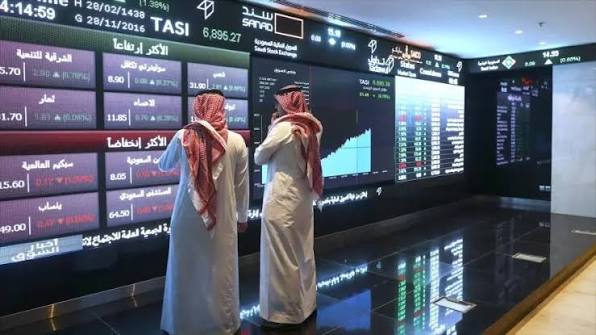
Saudi Arabia’s benchmark slipped 0.1% to 10,833, Abu Dhabi lost 0.8% to 10,008 and Dubai fell 0.4% to 5,880. Qatar also dropped 0.8% to 10,018, Kuwait declined 0.3% and Bahrain eased 0.1%. Oman gained 0.5% to 7,467, while Egypt’s EGX30, outside the Gulf, edged 0.1% lower to 54,829.
The common pressure came from fading optimism that Washington and Tehran could reach terms capable of ending the conflict and restoring full shipping through the Strait of Hormuz. Sentiment deteriorated after US President Donald Trump demanded compensation for American losses linked to earlier wars, attacks and protests, adding another disputed condition to an already difficult diplomatic process.
In Riyadh, Saudi Arabian Mining Company fell 1.2% and Saudi Aramco lost 0.1%. Aramco postponed the restart of its 400,000-barrel-per-day Jazan refinery until August 30 after Yemen’s Houthis said they had attacked the facility. The delay tied the equity reaction to a specific operating disruption rather than geopolitical headlines alone.
Brent crude futures were down 21 cents, or 0.24%, at $87.51 a barrel at 1138 GMT. The modest oil decline did not signal that supply risk had disappeared; instead, regional shares were pricing the combination of uncertain diplomacy, interrupted refining and shipping exposure. For Gulf companies, the same instability can support freight rates while weakening banks, energy producers and domestic risk appetite.
Dubai’s loss was led by a 2.4% fall in Emirates NBD, the market’s largest lender. Abu Dhabi was pressured by a 0.6% decline in ADNOC Gas, whose sales have been affected by disrupted regional energy flows. The two moves showed how geopolitical uncertainty was being transmitted through both financial stocks and companies directly exposed to gas production and exports.
ADNOC Logistics & Services moved in the opposite direction, gaining 3.6% after raising its 2026 profit guidance for the third time. The company had reported a 300% increase in second-quarter profit, supported by higher shipping charter rates and record operational activity. Its rally demonstrated that company-specific cash-flow gains from scarce maritime capacity could outweigh the broader regional discount.
Qatar National Bank declined 1.2%, helping pull Qatar’s index lower, while Egypt’s blue-chip market registered only a marginal loss. The next market tests are concrete: whether diplomacy produces enforceable shipping arrangements, whether Jazan restarts on the revised date, and whether freight earnings continue to offset damage elsewhere in the energy chain. Until those points become clearer, headline index moves are likely to conceal large differences among banks, producers and logistics operators.