
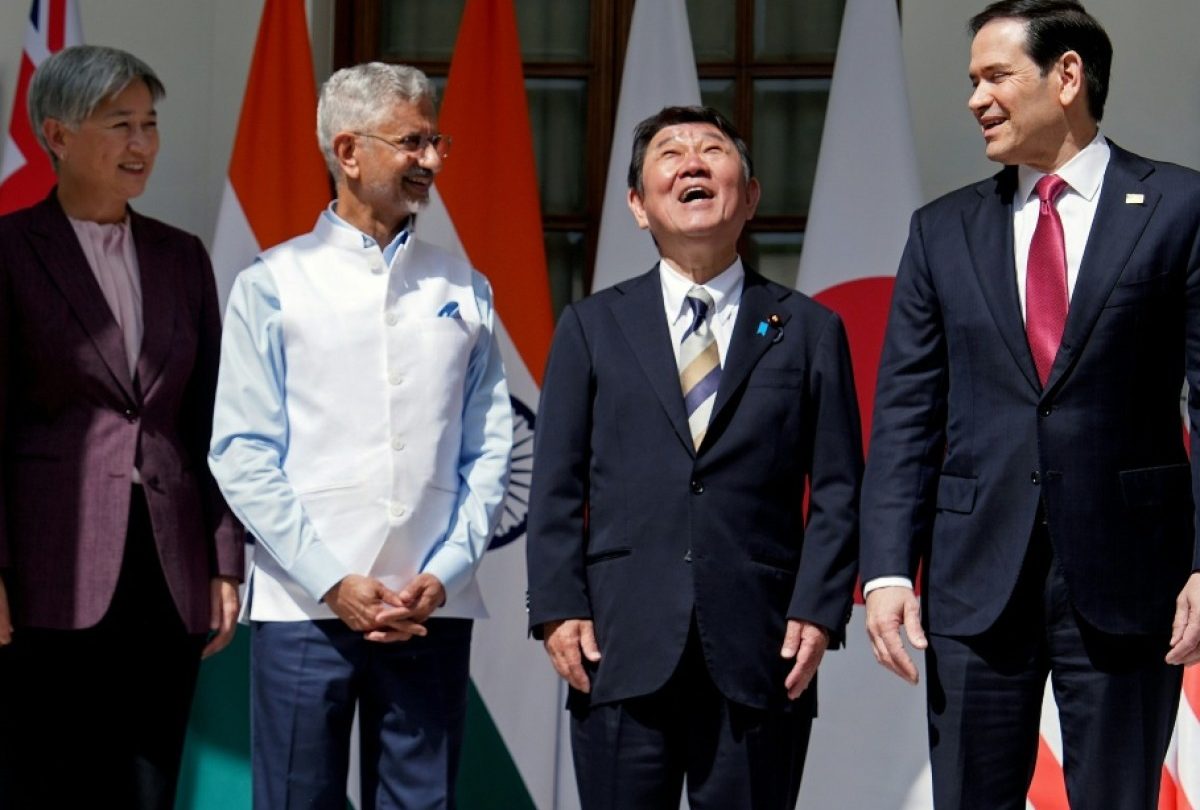
The Quad governments of Australia, India, Japan and the United States said they intend to provide more than $85 million in technical and financial assistance to expand access to trusted artificial intelligence across the Indo-Pacific. The commitment was announced after their foreign ministers met in Atlanta on October 31. It is an assistance envelope and policy direction, not evidence that the money has already been awarded or disbursed.
The funding is expected to include the Quad SI Accelerator. The joint statement uses “Super Intelligence,” while noting that Australia, India and Japan use the term to refer to artificial intelligence. The announcement did not divide contributions among the four governments, identify the first beneficiary countries, separate grants from loans or technical support, or provide a launch and delivery timetable.
The initiative extends beyond software models. The Quad will begin work to identify potential chokepoints in advanced-semiconductor and AI-hardware supply chains before disruptions occur. No companies, fabrication nodes, components or deadlines were named. The value of the review will depend on whether it leads to diversified capacity, inventories, supplier qualification or coordinated emergency arrangements.
Communications infrastructure forms a second track. The four countries plan to identify priority partners for 5G, 6G, Open Radio Access Networks and AI-enabled radio networks, create a pipeline of trusted 5G projects and explore future AI-RAN cooperation. They also want redundant undersea cable routes, shared cable-security practices and mapped digital-identity standards for public and private interoperability.
The technology package is tied to economic security. Ministers raised concerns about coercive export restrictions and non-market overcapacity without naming a country, while emphasizing reliable global supply chains. That framing makes “trusted” both a technical and strategic label. It may cover cybersecurity, vendor governance and resilience, but operational standards and eligibility rules still need to be published.
Critical minerals are linked to the same architecture. Quad members are working on recovering minerals from electronic waste and scrap to reduce dependence on a single supplier. The United States committed $10 million for relevant infrastructure in India and ASEAN countries. Export-credit agencies will meet in Tokyo on November 18 to identify practical cooperation, again before a project list or spending schedule is known.
A new Quad Business Leaders’ Forum is intended to connect companies, governments and policy experts and promote commercial deals. That can help convert diplomatic language into procurement and financing pipelines, but it also creates questions about vendor selection, local participation, data sovereignty, model access, energy requirements and whether recipient countries can maintain systems after initial assistance ends.
Implementation should be measured through named projects, contracts, financing terms, procurement rules, computing capacity, trained personnel, deployment dates and independently tested security outcomes. The $85 million commitment establishes a floor for ambition, not a delivered regional AI system. Its significance will depend on whether the accelerator produces additional capacity and resilient infrastructure rather than fragmented pilots or geopolitical branding.