
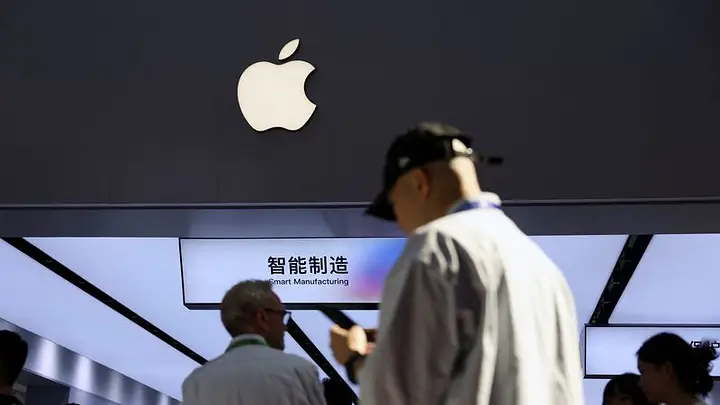
Apple has trained a large language model specifically for China with support from Alibaba, adding a proprietary component to the system it plans to offer on devices in the country. Three people familiar with the work described the project, while Apple and Alibaba did not publicly confirm it. The development would move Apple beyond relying exclusively on third-party Chinese models for local generative-AI functions.
China requires public generative-AI services to register with and clear its internet regulator, while U.S. models used by Apple elsewhere, including OpenAI’s ChatGPT and Anthropic’s Claude, are unavailable. A locally trained model gives Apple more control over product design and integration, but Alibaba’s assistance also shows that regulatory and technical localization cannot be separated from domestic partnerships.
Apple Intelligence is expected to reach China in the coming months through an update to iOS. The Cyberspace Administration of China registered Apple’s on-device generative-AI service in July, removing a major regulatory barrier. Registration cleared a route to deployment; it did not provide a public launch date, a complete device list or a detailed description of the final model architecture.
That architecture appears to use more than one model. Alibaba’s Qwen is scheduled to be incorporated into Apple Intelligence on compatible iPhone, iPad, Mac and Vision Pro devices in China, and the service has also been expected to include technology from Baidu. It remains unclear when Apple’s own China-trained model is invoked, which tasks stay on device and which requests move to a partner system.
Apple briefly published a Chinese-language guide showing eligible Mac users in mainland China how to connect Qwen with Siri and Writing Tools, then removed the document without explanation. The episode suggests that at least one Mac-specific integration path was prepared, but deletion of the guide prevents it from serving as a stable launch commitment or evidence that the feature is already broadly available.
Greater control matters commercially because China is Apple’s most competitive overseas smartphone market. Domestic manufacturers, including Huawei, have moved quickly to place AI assistants and generative features on handsets, while the absence of Apple Intelligence has been cited as a drag on iPhone demand. A proprietary model can let Apple differentiate its interface rather than expose every feature to a partner’s roadmap.
The arrangement is also unusual politically. A U.S. company is combining its own model with Chinese partners inside a regulatory system that has kept many foreign AI services outside the market. If the proprietary model launches under the registered service as described, Apple would become the first foreign company authorized to offer its own AI model in China, even as U.S.-China restrictions around advanced technology continue to widen.
The decisive details remain undisclosed. Apple has not explained the division of work among its model, Qwen and Baidu; how user data moves between device and partner infrastructure; or whether capabilities differ from Apple Intelligence elsewhere. Launch timing, supported hardware, performance, privacy controls and the persistence of Qwen integration will determine whether the architecture delivers a durable China product or remains a regulatory compromise.