

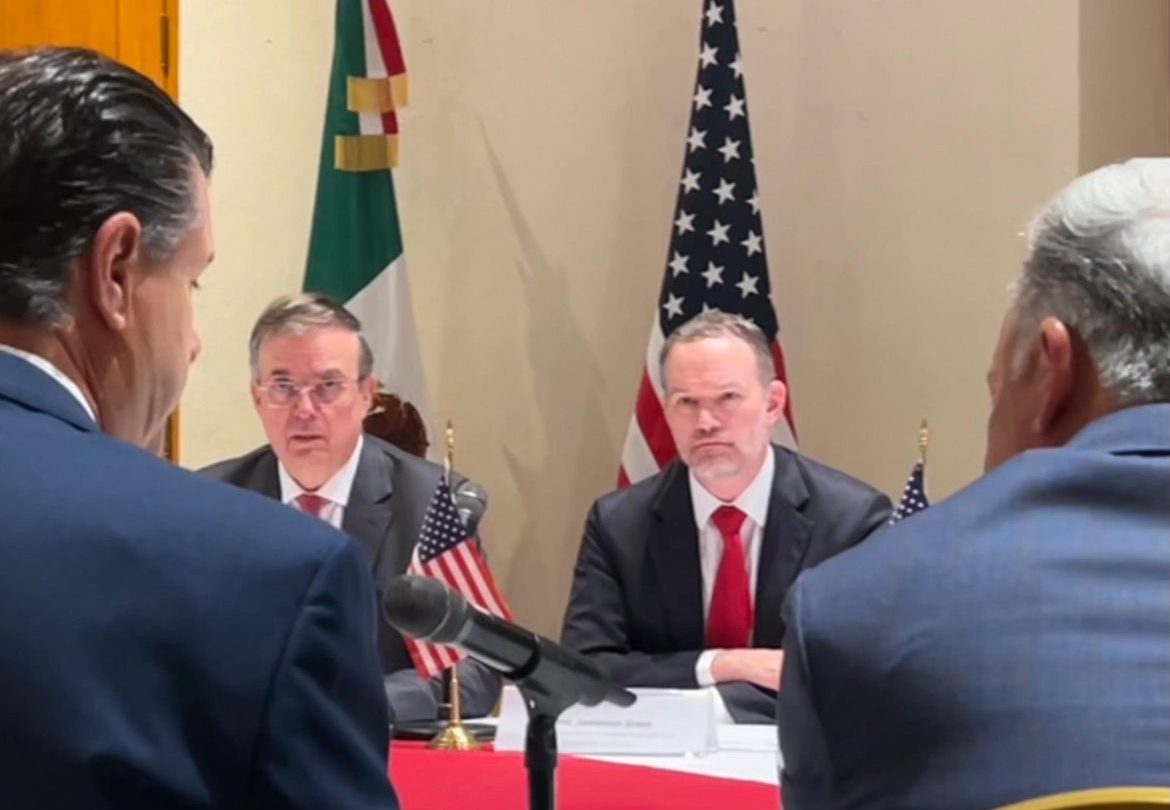
Mexico expects no change in the effective tariff paid on its exports after the United States introduced new duties of 10% and 12.5% on 60 trade partners. The conclusion rests on exemptions for goods that comply with the U.S.-Mexico-Canada Agreement.
Economy Minister Marcelo Ebrard said roughly 85% of Mexican exports to the United States will continue to enter tariff-free under USMCA. That share is decisive because it contains the cross-border production that satisfies the agreement’s origin and documentation requirements.
Another 10% of Mexican goods had been subject to a temporary measure under Section 122 of the Trade Act of 1974. That provision was due to expire as the new U.S. duties entered into force.
According to Ebrard, the new tariffs apply to the same 10% slice affected by the expiring measure. One charge therefore replaces another, maintaining the effective treatment rather than adding a second tariff layer across Mexican trade.
The distinction between the announced headline rate and the actual burden matters for manufacturers, logistics providers and importers planning North American supply chains. A formal exemption preserves the cost advantage of compliant regional production, but only when firms can prove eligibility.
The remaining exposure also highlights the commercial value of USMCA rules. Exporters outside the agreement’s requirements face the new duties, while companies with qualifying regional content keep preferential access. Compliance capacity becomes part of the competitive structure.
Mexico’s assessment is a government interpretation of the immediate tariff transition, not a guarantee that future U.S. trade measures will remain unchanged. Companies must still verify customs treatment product by product and monitor how U.S. authorities administer exemptions.
The next operational test comes at the border: customs entries must confirm that the 85% USMCA share remains duty-free and that the affected 10% experiences substitution rather than accumulation. Any divergence would turn a claimed continuity into a new cost for bilateral trade.