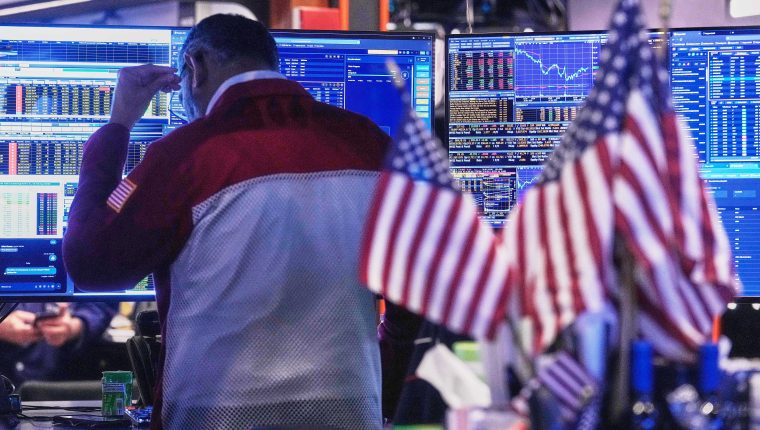

Global equities moved higher in a session shaped by renewed enthusiasm for artificial intelligence, uneven European earnings and an unexpected monetary-policy decision in New Zealand. The MSCI All-World index gained about 0.2%, but the advance was not uniform: Asian technology shares led, European banks weighed on their market and currencies reacted to different inflation and rate signals.
South Korea delivered the strongest equity move. The Kospi surged about 6% after SK Hynix reported quarterly profit more than seven times the prior-year level and announced roughly US$75 billion in shareholder returns. Japan’s Nikkei rose, China’s CSI300 advanced and the broader Asia-Pacific index outside Japan gained, extending the AI-linked rebound.
The rally still faced an immediate test from Alphabet and Microsoft results. Investors were looking for evidence that rising cloud and AI revenue can justify enormous capital expenditure. Equity markets continued to price a growth opportunity, while credit markets increasingly charged for financing risk, particularly at companies with weaker balance sheets or dependence on external borrowing.
Europe showed why a global headline can conceal local weakness. The STOXX 600 fell about 0.25% as Santander and UBS declined and payments company Adyen dropped 11%. The MSCI world gauge could rise at the same time because Asian gains and positive US futures outweighed losses in a specific region and sector.
The Reserve Bank of New Zealand delivered the clearest macroeconomic surprise. It held the official cash rate at 2.75% in a narrow vote when markets had expected an increase. The New Zealand dollar fell more than 1.3%, its largest daily decline in seven months, showing how positioning can amplify a move when a highly priced outcome fails to occur.
Other central banks created a dense event calendar. The Federal Reserve was expected to leave rates unchanged, although possible hawkish dissent could shape expectations, while markets anticipated a Bank of Canada increase. Australia’s faster inflation reinforced expectations of another domestic hike, demonstrating that the global rate cycle was not moving in one synchronized direction.
Energy and geopolitics added a separate inflation channel. Brent rose about 1.1% to US$115.13 after an attack on a Saudi refinery renewed supply concern, European natural gas reached fresh four-year highs near €99.2 per megawatt-hour, and Israel’s shekel fell 2.2% as election results left no clear parliamentary majority.
The session should therefore be read as a cross-asset snapshot before several catalysts, not as confirmation of a durable global trend. The next evidence would come from technology monetization, capital-spending guidance, central-bank communication and energy flows. Until then, AI optimism, financing anxiety, inflation and political risk were moving different parts of the market in opposite directions.