

Oil futures rose in early Asian trading as the market gave more weight to physical supply risks than to the possibility of diplomatic de-escalation. Front-month West Texas Intermediate increased 0.6% to US$100.47 a barrel and Brent advanced 0.5% to US$114.45. Those levels were intraday observations, not settlement prices or guarantees of a continuing rise.
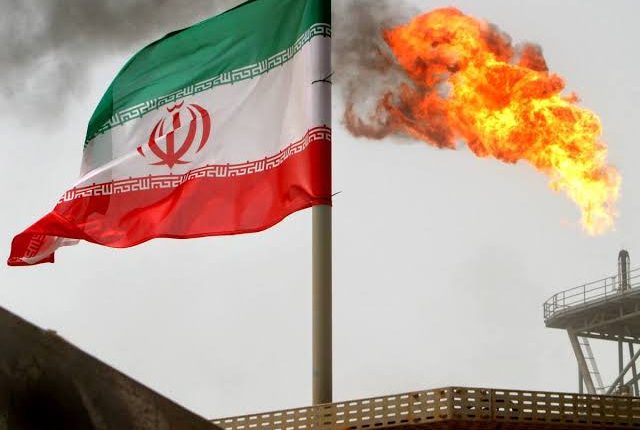
Prospects for talks had eased some political tension, but they did not produce meaningful or sustained selling. Traders increasingly focused on events on the ground after Saudi Arabia said it had contained a fire near Ras Tanura following an attack. Ras Tanura is the kingdom’s largest oil-export terminal, making even a contained incident relevant to perceived supply security.
A fire near strategic infrastructure is not equivalent to a verified long-term loss of production or export capacity. The important distinction is between physical damage, precautionary operations and the risk premium investors pay for the possibility of a larger disruption. Available information supported heightened concern but did not quantify barrels permanently removed from the market.
The broader transport system remained constrained. Seven-day average oil flows through the Strait of Hormuz were around 9.34 million barrels per day, roughly 54% of a prewar baseline of 17.15 million. Yet non-Iranian Middle Eastern exports to international markets averaged about 16.7 million barrels per day in October, slightly above the 16.3 million prewar level.
Those figures are not contradictory. Producers can redirect cargoes, use alternative terminals, increase ship-to-ship transfers or draw on logistical buffers even while the principal strait operates below normal. Resilience in aggregate exports therefore reduces immediate shortage risk, but does not eliminate congestion, delay, exposure to attack or dependence on more complex routing.
Insurance and freight transmit security risk into delivered prices before a large production outage occurs. Vessels exposed to attacks demand higher cover, additional transfers absorb tanker capacity and longer or less efficient routes raise cost. These frictions can support crude and refined-product prices even when headline export volumes remain comparatively strong.
Forecast revisions reflect that distinction. One large bank raised its end-2026 Brent estimate to US$110 from US$100 and increased 2027 projections, arguing that higher flows had not normalized the market because vessel risk and logistics remained impaired. Such forecasts are conditional judgments, not price commitments or evidence that every scenario requires persistent three-digit crude.
The next decisive information will be official damage assessments at Ras Tanura, terminal throughput, tanker tracking, insurance premiums, inventory changes and verifiable diplomatic progress. The price rise showed that traders still demanded compensation for supply uncertainty; it did not establish a lasting outage, the failure of all diplomacy or a fixed future path for oil.