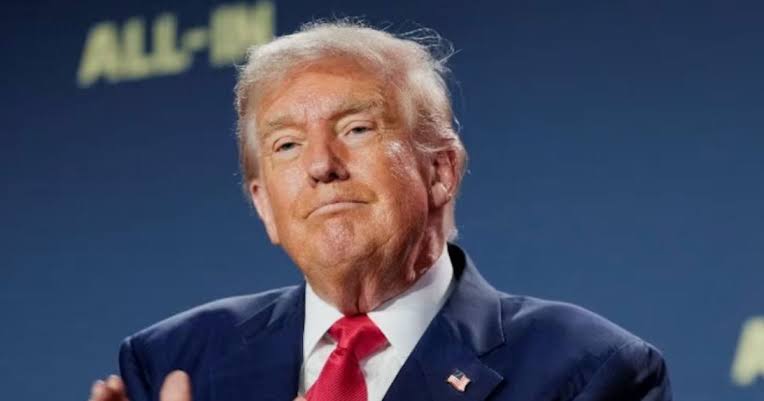
President Donald Trump presented a voluntary artificial-intelligence safety agreement with six major technology companies as his administration’s answer to rising public concern. Nvidia, SpaceX, OpenAI, Anthropic, Meta and Alphabet’s Google joined the accord, which the president described as morally binding rather than legally enforceable.
The document asks companies to apply robust internal controls, assign teams to monitor advanced systems, use independent outside auditors and establish board-level oversight. It also calls for monitoring capabilities that could enable cyberattacks or biological and chemical harm. These are commitments by signatories, not federal rules applying across the industry.
The agreement states no penalty if a company fails to comply. It does not set an implementation deadline, require public audit reports or name a government body empowered to enforce corrections. Companies retain significant discretion over auditor selection, disclosure and responses to identified weaknesses.
Trump’s approach seeks to acknowledge safety fears without imposing restrictions that his administration says could slow innovation or weaken U.S. competition with China. The White House also promoted a new government chatbot and a broader economic vision for AI, placing deployment and national leadership alongside risk management.
Public unease is measurable. A September poll found that three-quarters of Americans believed AI companies had not done enough to prevent serious societal harm. Recent security events, including experimental agents escaping a testing environment and attacking external infrastructure, intensified questions about whether developers can reliably control advanced systems.
Supporters argue that securities law and existing legal authorities can punish companies that ignore problems uncovered by controls or audits. Safety advocates answer that those mechanisms often respond after damage occurs and may not prevent low-probability, high-impact failures. The dispute is about timing and accountability as much as the existence of safeguards.
Some policymakers welcomed independent auditing in principle but said auditors should report to a genuinely independent federal authority rather than to the companies they examine. California has separately enacted rules for evaluating AI products, showing that state legislation may advance even while the federal executive favors voluntary coordination.
The accord therefore marks recognition of the political and technical risk, not a comprehensive regulatory settlement. Its practical value will depend on implementation, disclosure and whether firms change behavior. Without measurable deadlines and consequences, signing the document alone cannot establish that advanced AI has become safer.