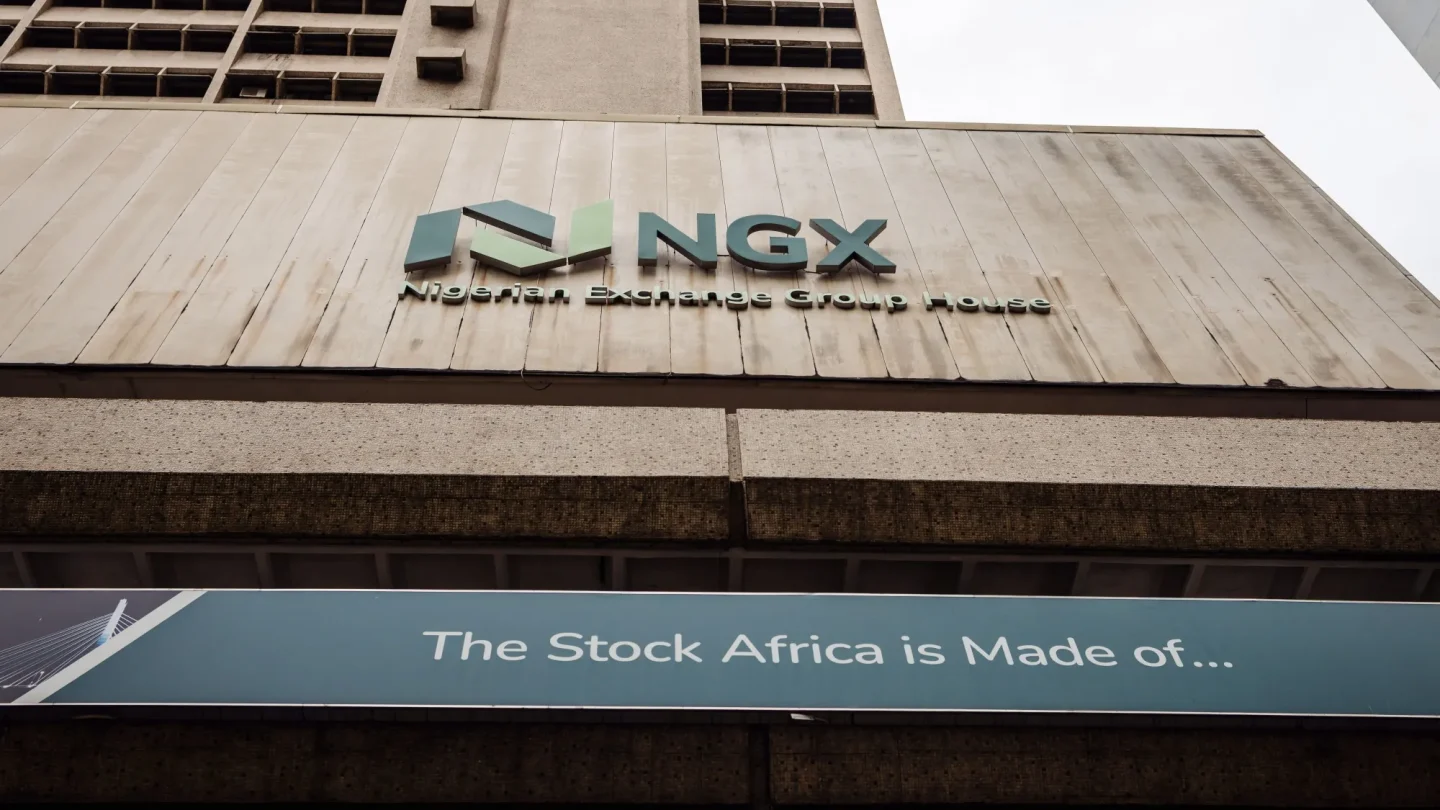
Several African governments are trying to convert public assets, domestic savings and mineral policy into bargaining power with investors. Nigeria has supplied the most consequential promise: President Bola Tinubu said Nigerian National Petroleum Company Limited would be reformed and listed on the Nigerian Exchange. He disclosed no date, stake size or transaction structure, so the statement remains a political commitment rather than a scheduled initial public offering.
The pledge arrives after a steep expansion of Nigeria’s equity market. Nigerian Exchange Group told the presidency that listed market value had risen from just under NGN 30 trillion in 2023 to about NGN 160 trillion, while the All-Share Index advanced from roughly 52,000 to 244,000 points. The exchange expects capitalisation to approach NGN 230 trillion by year-end if anticipated listings materialise. At street level, however, Dangote’s depot cut for petrol from NGN 1,215 to NGN 1,165 per litre had not yet been passed through by filling stations, exposing the gap between wholesale policy signals and household prices.
South Africa is mobilising pension and development capital for a different state-backed proposition. The SA-H2 green-hydrogen fund completed a first close of ZAR 3 billion, about USD 182 million, with commitments from the European Commission’s Global Gateway, Invest International, the Public Investment Corporation on behalf of the Government Employees Pension Fund, Sanlam Life Insurance and the Industrial Development Corporation. The vehicle targets ZAR 12 billion by mid-2028.
That fund has already committed USD 20 million to the Hive Hydrogen green-ammonia project at Coega in the Eastern Cape and up to USD 4 million to a fuels producer in Gauteng. Those allocations are early project commitments, not evidence that South Africa’s broader hydrogen export industry is operating at scale. Reaching the final target will require another ZAR 9 billion and projects capable of moving from development into construction and contracted sales.
Namibia is pursuing about USD 250 million for industrial decarbonisation while attaching a domestic-processing condition to its critical-minerals strategy. After selection for a USD 1 billion global programme covering hard-to-abate industries, the government has emphasised that lithium and rare earths should be processed inside Namibia rather than exported only as raw material. The commercial test is whether investors will finance conversion capacity under those terms, not merely extraction.
Morocco and Angola illustrate two other channels for capital. Moroccan hospital operator AKDITAL is opening 15% of its international holding company to Saudi-based Arab Invest, while Saham Bank has launched a MAD 500 million transformation programme. Angola, meanwhile, is approaching single-digit inflation and has begun reducing interest rates as the Lobito Corridor keeps the country central to copper and cobalt logistics from the Democratic Republic of Congo and Zambia. Recent US-Angolan naval discussions produced no signed procurement or equipment agreement.
Burkina Faso provides the fiscal counterpoint. Its government has budgeted CFA 117 billion, roughly USD 190 million, for a memorial to Thomas Sankara, the president killed in 1987 and remembered for advocating self-reliance and austerity. The expenditure is therefore more than a cultural project: for a military-led administration that invokes Sankara’s legacy, it is also a large public-finance choice and a claim to political legitimacy.
The common thread is not a single continental investment cycle but a series of attempts to determine what is listed, financed, processed or retained locally. The next evidence will be specific: a timetable and structure for the NNPC offering, a further ZAR 9 billion for SA-H2, bankable Namibian processing plants, execution of Morocco’s announced transactions and a public accounting of Burkina Faso’s memorial budget. Until those milestones appear, the figures measure ambition and bargaining positions more than completed economic transformation.