
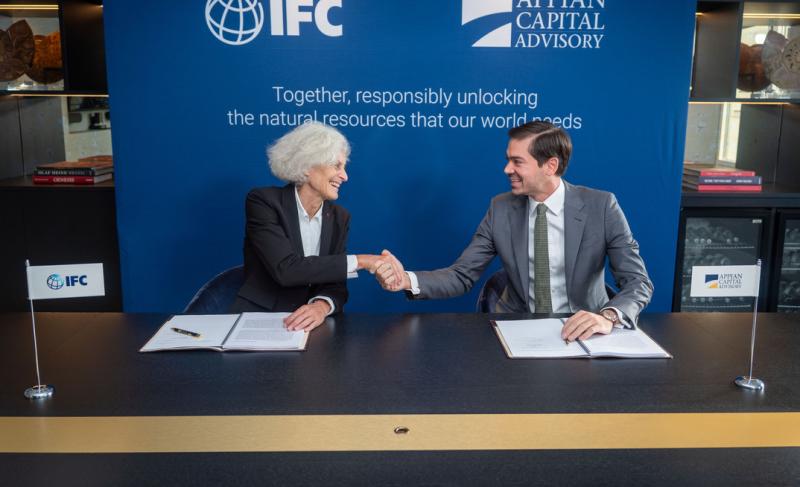
Mining investor Appian Capital Advisory and the International Finance Corporation say roughly 70% of IFC’s initial $100 million commitment to their emerging-market mining partnership has been allocated. The deployment—about $70 million—was spread across three investments within roughly 12 months. It is progress against the first commitment, not evidence that the partnership’s full $1 billion ambition has already been funded or invested.
The three assets cover different commodities and development stages. Capital went to Asante Gold’s operating mines in Ghana, the Omico copper project in Namibia and Atlantic Nickel’s nickel-copper-cobalt operation in Brazil. The mix gives exposure to precious metals, electrification minerals and an existing producer, but each asset retains country, construction, operating, price and permitting risks.
The arrangement was launched in 2025 with a stated objective of mobilising as much as $1 billion. IFC, the private-sector arm of the World Bank Group, supplied the initial $100 million. Appian contributes specialist mining selection, technical oversight and portfolio management. The gap between an initial commitment and the broader mobilisation target is important: future capital still requires projects, approvals and participating investors.
The partners expect to allocate the remaining roughly 30% of the initial commitment by year-end from a pipeline in Africa and Latin America. That timetable is a target rather than a completed transaction. Due diligence, environmental and social reviews, valuation, documentation and investment-committee decisions can change the timing or the final asset list.
For IFC, the vehicle is its first emerging-market metals and minerals strategy and its first partnership with a mining-focused private-equity investor. Public development capital can absorb risks commercial lenders avoid and crowd in private funding. It also brings expectations around labour, communities, biodiversity, tailings, emissions and transparent use of proceeds that must be monitored through the life of each mine.
Appian says it has helped bring 12 mines into production. That operating record is relevant because mining returns are determined not only by commodity prices but by geology, recovery rates, capital discipline, infrastructure and ramp-up. Still, a sponsor’s history does not guarantee these three investments will meet production, development or return assumptions.
The partnership is also discussing comparable structures with the European Bank for Reconstruction and Development and other development-finance institutions. Those discussions indicate appetite for a repeatable model, but they are not signed commitments. Replication will depend on institutional mandates, geographic eligibility, risk-sharing terms and a credible pipeline of investable mines.
The next evidence is concrete: the remaining $30 million allocation, mine-level capital deployment, construction and production milestones, compliance reporting and additional third-party capital. A percentage deployed can show execution speed, yet the financial and development outcome will be measured by productive capacity, returns and local benefits—not by the announcement of capital alone.