
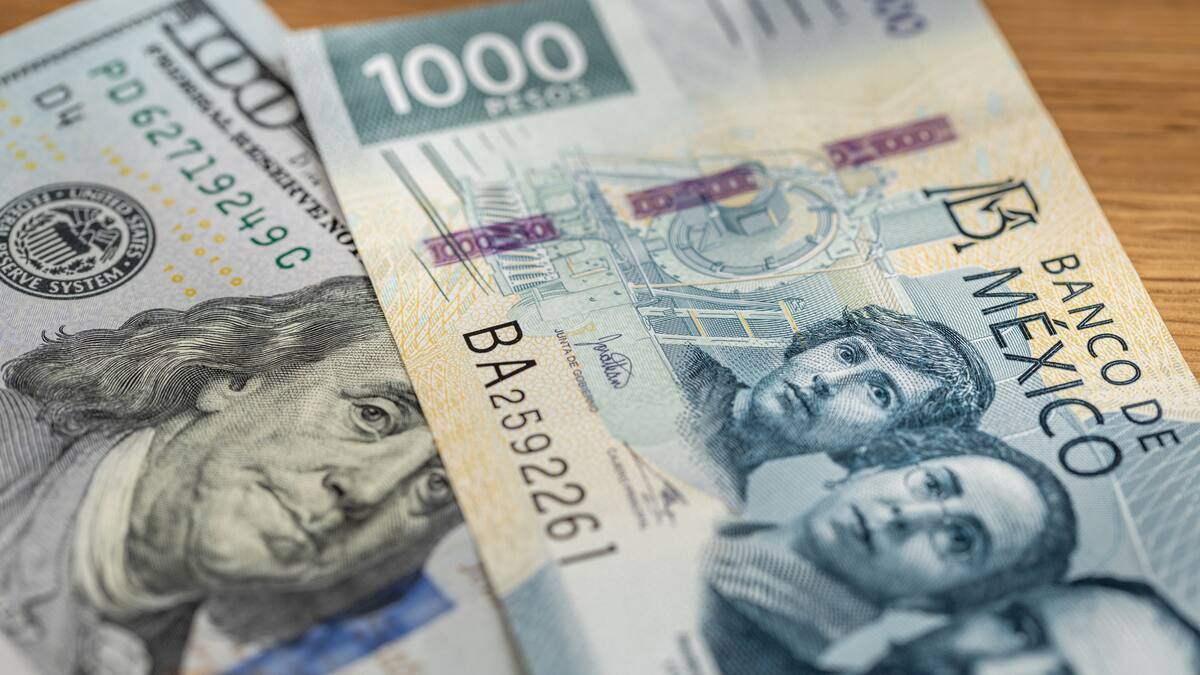
The Mexican peso weakened 0.69% to about 18.66 per U.S. dollar in electronic trading on November 16, losing 13 centavos from the previous Friday’s close. Mexican banks were closed for the Revolution Day holiday, so the quotation was an intraday offshore and electronic-market snapshot rather than a normal domestic session with full participation.
Retail bank prices were different from the wholesale reference. Banamex quoted the dollar at 19.02 pesos for sale and 17.95 for purchase. That spread includes retail costs and liquidity conditions; it should not be compared mechanically with the 18.66 interbank level as though one of the prices were incorrect.
The immediate pressure came from a stronger dollar and elevated U.S. Treasury yields. October U.S. inflation rose 0.4% month on month, above the 0.3% expected, reinforcing concern that price pressure was broadening and that the Federal Reserve could raise rates at its December meeting.
Strategist Felipe Barragán noted that the U.S. ten-year yield ended the prior week near 5.14%, while the dollar index moved above 103 to a two-month high. Higher risk-free returns can attract capital toward dollars and make carry positions in emerging-market currencies less attractive or more volatile.
Treasury yields moderated slightly during the holiday session: the ten-year was around 5.13%, the twenty-year 5.51% and the thirty-year 5.47%. The Mexican ten-year yield was reported unchanged near 9.308%. Absolute yield gaps matter, but investors also price inflation, policy credibility, liquidity and exchange-rate risk.
Thin holiday conditions can amplify a currency move because fewer domestic participants are available to absorb orders or provide two-way liquidity. The 0.69% decline should therefore be read as a real market signal with limited-session context, not automatically as a new persistent trend. The next full Mexican session can confirm or reverse it.
The peso is sensitive to U.S. rate expectations because a higher dollar yield changes portfolio incentives and financing costs. Domestic variables remain equally important: Banxico guidance, Mexican inflation, fiscal expectations, trade flows, remittances and political risk can offset or reinforce the external impulse.
The next evidence will be full-volume trading, U.S. inflation and labour data, Federal Reserve communication and Banxico’s response. Traders should preserve the timestamp and market type when quoting 18.66. A holiday intraday price, a retail bank selling rate and a later official close answer different questions and should not be merged.