
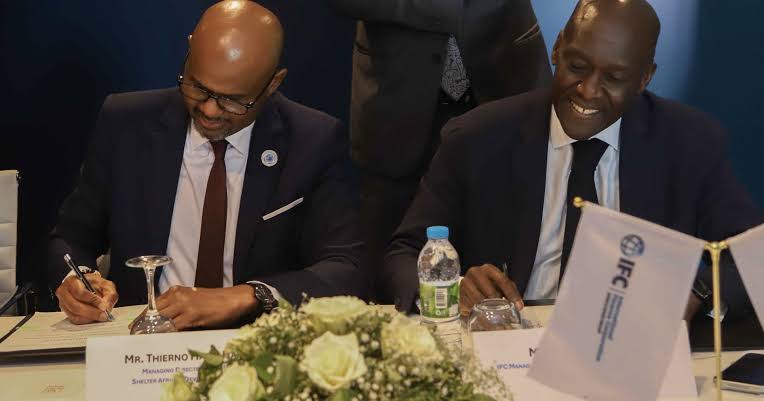
Shelter Afrique Development Bank closed its inaugural FCFA60 billion sustainable bond in the West African Economic and Monetary Union market. Subscriptions ran from October 7 to 30. Closing confirms that capital was raised under the issue, but it does not mean the housing projects financed with the proceeds have already been built or that projected social outcomes have been achieved.
The transaction is split into a five-year tranche paying 6.10% and a seven-year tranche paying 6.30%. CGF Bourse served as lead arranger and UCA as co-lead manager. The International Finance Corporation and Ecobank, through Ecobank Senegal, acted as anchor investors, with the West African Development Bank among the principal financial participants.
Local-currency funding is central to the design. Housing projects generally collect rents, sales proceeds or loan repayments in regional currency, so borrowing in the same currency reduces exposure to exchange-rate swings. It does not remove credit, construction, affordability, refinancing or interest-rate risk, and the longer maturities require disciplined project selection.
Managing director Thierno-Habib Hann placed the issue within a wider African housing deficit estimated at more than 53 million units. For WAEMU specifically, cited estimates point to a shortage of about 3.5 million homes and an additional need of nearly 250,000 each year. Those numbers explain scale; they do not validate every proposed project.
The first phase is intended to finance a pipeline associated with 17,554 sustainable homes and 87,772 jobs. These are prospective outputs linked to deployment of proceeds. Final delivery will depend on developers, land, permits, infrastructure, procurement, construction timetables, affordability criteria and household access to mortgages or rental arrangements.
The bond operates under a Sustainable Finance Framework developed with the Global Green Growth Institute. S&P Global Ratings issued a favourable opinion on alignment with recognised principles, including ICMA green-bond and sustainability-bond guidance and relevant loan principles. Regional regulator AMF-UMOA and central bank BCEAO approved the transaction.
A framework and external opinion strengthen governance but do not substitute for allocation and impact reporting. Investors will need to see which projects receive funds, how affordable and energy-efficient housing is defined, whether proceeds remain traceable, and how jobs and environmental benefits are measured without double counting.
The next evidence will be disbursements, project-level allocations, construction progress, occupancy, affordability and periodic impact reports. The issue demonstrates demand for regional sustainable debt and reduces currency mismatch. Its development value will be proven only when long-term capital produces completed, resilient homes accessible to intended households.