
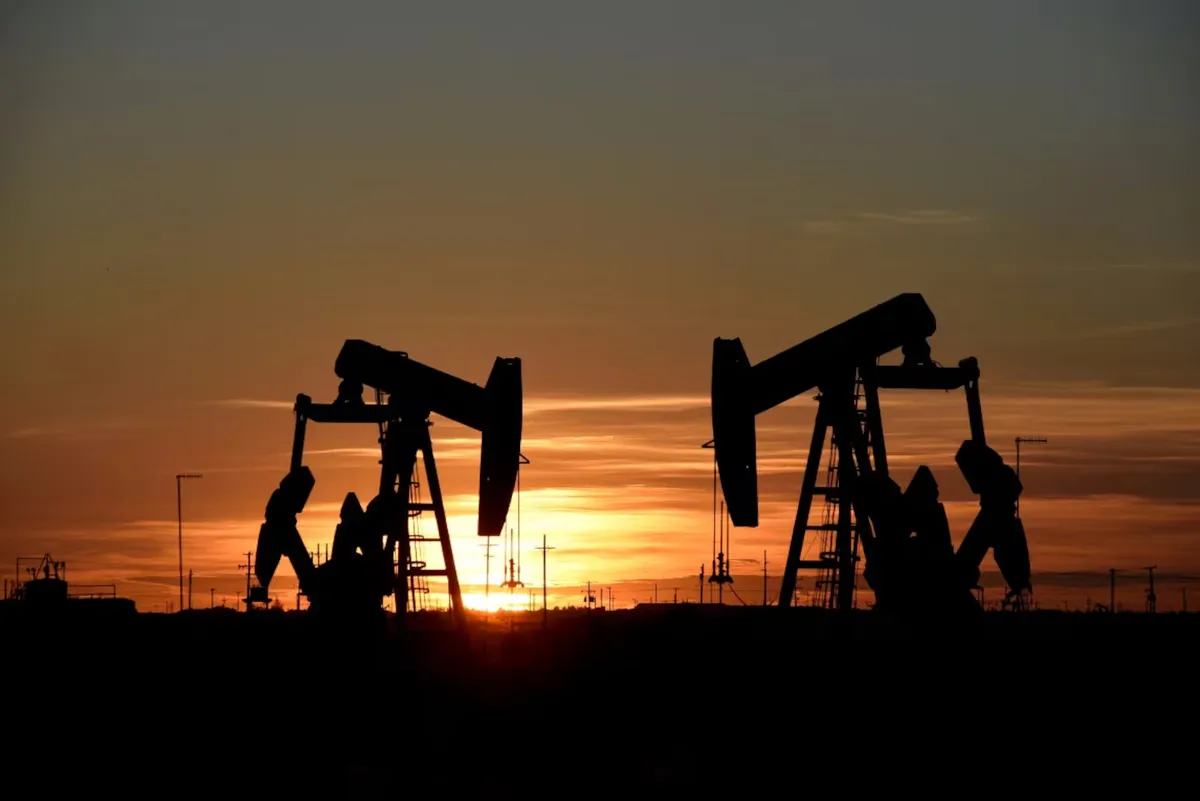
Oil prices surged past $90 per barrel on Tuesday after Yemen's Houthi rebels, backed by Iran, declared a maritime blockade against Saudi vessels, intensifying concerns over global energy supplies following new attacks on tankers in the Strait of Hormuz.
Brent crude, the global benchmark, rose 1.8% to $90.85 per barrel shortly before 8:00 a.m. ET, while U.S. West Texas Intermediate gained a similar proportion to $83.97 per barrel. Brent has rallied nearly $20 per barrel this month as U.S.-Iran tensions have once again escalated.
The price surge came even before the Houthi threats to Saudi exports through the Red Sea — a vital artery for the global oil market — via a blockade of the Bab el-Mandeb Strait, a strategic chokepoint at the southern end of the sea. Saudi Arabia has increased exports from its Red Sea port of Yanbu to 4 million barrels per day, seeking to bypass the Strait of Hormuz, according to consultancy Rystad Energy.
Rystad's vessel tracking data indicates that approximately 2.5 million barrels per day of this volume are currently moving southward through Bab el-Mandeb, leaving a critical alternative export route directly exposed to potential Houthi action, wrote Jorge León, the firm's senior vice president.
The International Energy Agency warned on Tuesday that global energy security would deteriorate further if the Strait of Hormuz is not reopened. "There is no room for complacency on oil security in the face of escalating hostilities and the continued reduction of available commercial stocks," said Fatih Birol, the IEA's executive director.
The blockade declaration adds to a growing list of disruptions in the region, compounding the impact of the Strait of Hormuz closure. With both key chokepoints now under threat, global oil markets are pricing in a significant supply risk premium. The situation underscores the vulnerability of Middle Eastern energy flows and the fragility of global supply chains in the face of geopolitical escalation.