
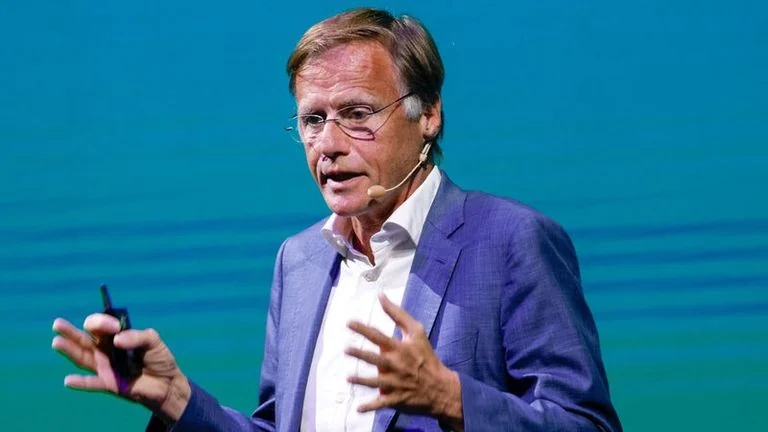
Infineon chief executive Jochen Hanebeck said the German semiconductor manufacturer needs firm customer commitments before it can justify further production expansion. Speaking in Munich ahead of the electronica trade fair, he argued that chipmakers already carry heavy factory and research spending and cannot absorb all demand and utilisation risk on their own.
The warning follows substantial investment. Infineon opened a €5 billion semiconductor factory in Dresden in July, equivalent to about US$5.6 billion at the cited exchange rate. In October it announced plans to invest roughly €1.1 billion in gallium nitride chip production at Villach, Austria. Those projects show expansion is continuing, not frozen.
Hanebeck did not specify the contractual form, volume or duration of the customer commitments he wants. They could provide greater visibility over future utilisation, but the announcement should not be read as a disclosed order book or take-or-pay programme. Until terms exist, “commitment” remains a commercial requirement rather than a measurable funding source.
Semiconductor plants have high fixed costs, long construction and qualification cycles and rapidly changing technology. Building ahead of demand can create underused capacity and pressure prices; building too slowly can produce shortages and lost industrial customers. Sharing risk with buyers can align investment timing, but it may also reduce customers’ flexibility.
Gallium nitride is a different technology focus from conventional silicon capacity. It can serve high-efficiency power applications relevant to data centres, automotive systems, renewable energy and industrial equipment. The €1.1 billion Villach plan therefore represents both capacity and portfolio positioning, while still facing yield, customer qualification and adoption risk.
Hanebeck said government support remains essential because public funding, engineering expertise and scale influence where factories are built. Europe offers substantial assistance, yet he said it does not create a level playing field against other regions. The comparison implies that subsidy competition affects investment location alongside labour, energy, suppliers and market access.
The policy tension is clear. Europe wants semiconductor resilience and domestic capacity, but firms cannot rationally build unlimited factories without credible demand. Governments can reduce capital cost, while customers can support utilisation and manufacturers provide technology and execution. Poorly designed support could socialise downside risk without securing competitive production.
The next evidence will be named customer agreements, final Villach milestones, Dresden utilisation, public-support decisions and Infineon’s capital-expenditure guidance. The company is not refusing expansion; it is setting conditions for the next increment. Whether Europe gains capacity will depend on coordinated demand, finance and policy rather than manufacturer investment alone.